Blogs
Google Customer Engineer vs Forward Deployed Engineer: What's the Difference?
Google Customer Engineer vs Forward Deployed Engineer: What's the Difference?
By
R&D, FDE Academy
August 25, 2026

A Google Customer Engineer supports the sales process for Google Cloud: running technical discovery, building proofs of concept, presenting architecture recommendations, and helping close enterprise deals, work that largely ends once a contract is signed. A Forward Deployed Engineer builds and owns a production system inside a customer's environment, work that begins where a Customer Engineer's typically ends. They get grouped together often, both are technical, both are customer-facing, but the actual scope of the two roles is meaningfully different.
Based on Google's own current job postings across multiple Customer Engineer tracks (general Cloud, Infrastructure, AI/ML, Early Stage Startups), the role is consistently structured around supporting Google's sales motion. Responsibilities across these postings include conducting technical discovery, architecting client solutions to meet requirements, building proofs of concept, presenting product messaging, and explicitly partnering with sales teams and Cloud Business Development to close deals.
The consistency across tracks is notable. The Infrastructure-track posting frames the role as a hybrid technical and business advisor, leading cross-functional teams to help customers plan and govern their cloud strategy. A regional Cloud posting lists supporting bid responses, delivering solution briefings, and traveling for technical reviews and onsite delivery activities, work that sounds deployment-adjacent on the surface but sits squarely within a pre-sales advisory function rather than production ownership.
Even the AI/ML-focused Customer Engineer track, the one most likely to be confused with FDE work given the AI framing, describes the role as supporting Technical Sales teams in a machine-learning subject-matter-expert capacity, helping prospective customers evaluate Google Cloud's ML capabilities and working through technical roadblocks during the sales cycle. This is genuinely skilled, technical work, requiring real fluency with machine learning frameworks and cloud-native ML architecture, but it's oriented toward winning the deal, not owning what happens in production after it's signed.
A Forward Deployed Engineer embeds with a customer to build and ship a production system, not a proof of concept, and stays accountable for it through stabilization: discovery, integration, evaluation, and ongoing ownership once the system is live. Where a Customer Engineer's job is largely finished once a deal closes, an FDE's job largely begins there.
The distinction is structural, not just a difference in seniority or title branding. A Customer Engineer succeeds when a deal closes with a well-scoped, well-demonstrated solution. An FDE succeeds when a real system is working, adopted, and stable inside a customer's actual production environment, months after any deal was signed.
Google Customer Engineer base salary averages $114,000 to $149,000 depending on the data source, with a typical range of $92,000 to $143,000 and top earners (90th percentile) reaching roughly $174,000. This is base salary specifically; Google's total compensation structure includes RSUs and bonus on top of base, though reliable, role-specific total comp data for this exact title is harder to pin down publicly than base salary is, worth confirming directly during any real offer negotiation rather than assuming a specific multiplier.
For comparison, a closely related title, Customer Success Engineer at Google, has more complete, verified total compensation data available: reported packages range from roughly $141,000 at the entry level to $560,000 at the most senior level, with a median around $234,000. That range illustrates how much total comp can vary even within sales-and-customer-facing engineering tracks at the same company, level and specific title matter enormously, which is exactly why confirming the real compensation structure for a specific role and level beats relying on any single averaged figure.
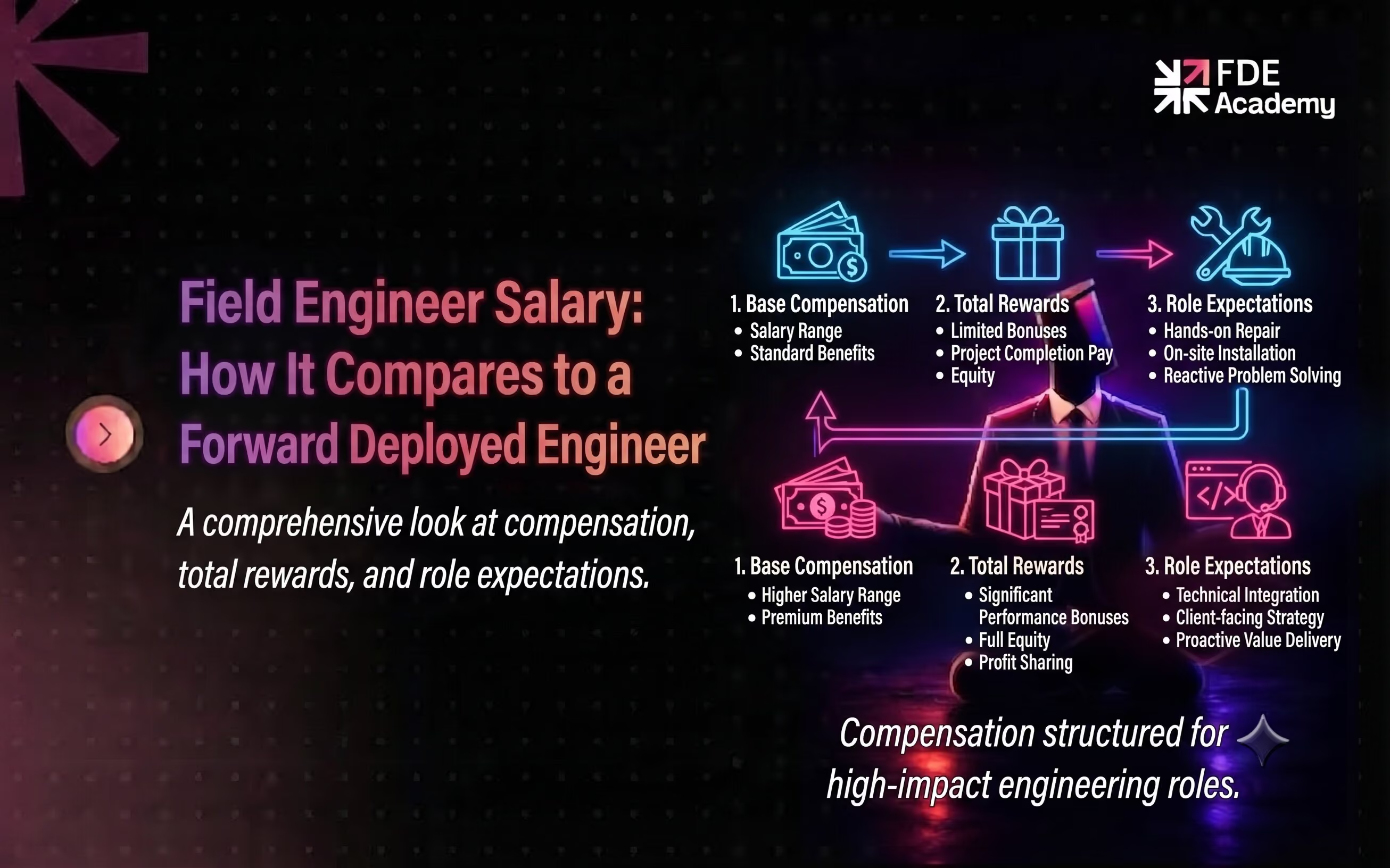
Forward Deployed Engineer compensation runs meaningfully higher across the board: $250,000 to $450,000 total comp at the broader market level, and $350,000 to $550,000 or more at frontier AI labs specifically. See our Forward Deployed Engineer salary guide for the complete breakdown by company and level. The gap reflects the difference in what each role is accountable for, closing a deal versus owning whether a production system actually works.
It's worth addressing directly: our own site's guide to Forward Deployed Engineer jobs in India lists "Customer Engineer (Google Cloud, when AI-focused)" as one of several terms worth searching under when looking for FDE-equivalent roles, since companies use inconsistent titles for similar work. That guidance is reasonable as a broad search strategy, casting a wide net across differently-titled postings is smart when job-hunting. But it's worth being precise here: based on Google's own current job descriptions, including the AI/ML track specifically, Customer Engineer at Google is consistently structured as pre-sales technical work, not production deployment ownership.
The confusion is understandable, and it isn't unique to Google specifically. Both roles are technical, both are customer-facing, both can involve travel to a customer's site, and both increasingly touch AI and cloud infrastructure. But "customer-facing and technical" describes a large category of jobs with genuinely different scopes and pay bands within it, and Google's Customer Engineer role, specifically, sits on the pre-sales side of that category rather than the production-ownership side FDE occupies.
This pattern shows up broadly across the industry as companies race to attach AI-relevant language to existing job titles. A title with "AI" or "customer" in it doesn't reliably tell you which side of the pre-sales/post-sales line a role sits on, the job description does. Treating the presence of AI-adjacent keywords in a title as evidence of FDE-equivalent scope, without checking the actual described responsibilities, is one of the more common ways job seekers misjudge both the fit and the likely compensation of an opportunity before they've even applied.
Yes, and the skills already built in this role, technical discovery, cloud architecture fluency, presenting to executive stakeholders, translating business needs into a technical plan, transfer directly and are genuinely valuable in FDE work. What doesn't transfer automatically is production code ownership: building and shipping software that has to actually run reliably in a customer's live environment, not just demonstrate a concept convincingly.
The realistic path: build real, hands-on production engineering experience, ideally through a project that goes beyond a proof of concept and includes genuine deployment, monitoring, and evaluation work, not another polished demo. A Customer Engineer already knows how to run a strong discovery conversation and present a compelling technical story; what's missing is evidence you can carry that story through to a working, maintained system rather than handing it off once the deal closes. Our Forward Deployed Engineer skills roadmap covers the specific competencies worth building, and our Forward Deployed Engineer eligibility checklist covers what companies actually screen for, a genuinely different bar than pre-sales technical roles typically require.
No. Google Customer Engineers support the sales process through technical discovery, demos, and proofs of concept, work that largely ends at deal close. Forward Deployed Engineers build and own production systems inside a customer's environment, work that begins where a Customer Engineer's typically ends.
Base salary averages $114,000 to $149,000 depending on the data source, with a typical range of $92,000 to $143,000 and top earners reaching around $174,000. This is base pay; total compensation with Google's standard RSU and bonus structure would run higher.
Because companies use inconsistent titles for similar work, and casting a wide search net helps job seekers avoid missing relevant postings. That said, based on Google's own current job descriptions, Customer Engineer is consistently structured as pre-sales work rather than production deployment ownership, worth confirming directly against the actual job description rather than assuming title equivalence.
Not primarily. Google's own posting for this track describes working with Technical Sales teams as a machine learning subject matter expert to support the sales process, helping customers understand Google Cloud's ML capabilities, not owning a production AI system end to end.
Yes, for the customer-facing discovery and technical communication side specifically. The production code ownership piece, building and maintaining a real, live system, needs to be developed separately, since pre-sales work doesn't typically require it.
Production engineering depth: shipping code that runs reliably in a customer's live environment, building evaluation and monitoring systems, and staying accountable for a system's real-world performance over time, none of which a pre-sales-oriented role like Customer Engineer typically requires.
The world is hiring - and this Academy prepares you for it.