Blogs
Why Do Forward Deployed Engineers Travel?
Why Do Forward Deployed Engineers Travel?
By
R&D, FDE Academy
July 25, 2026

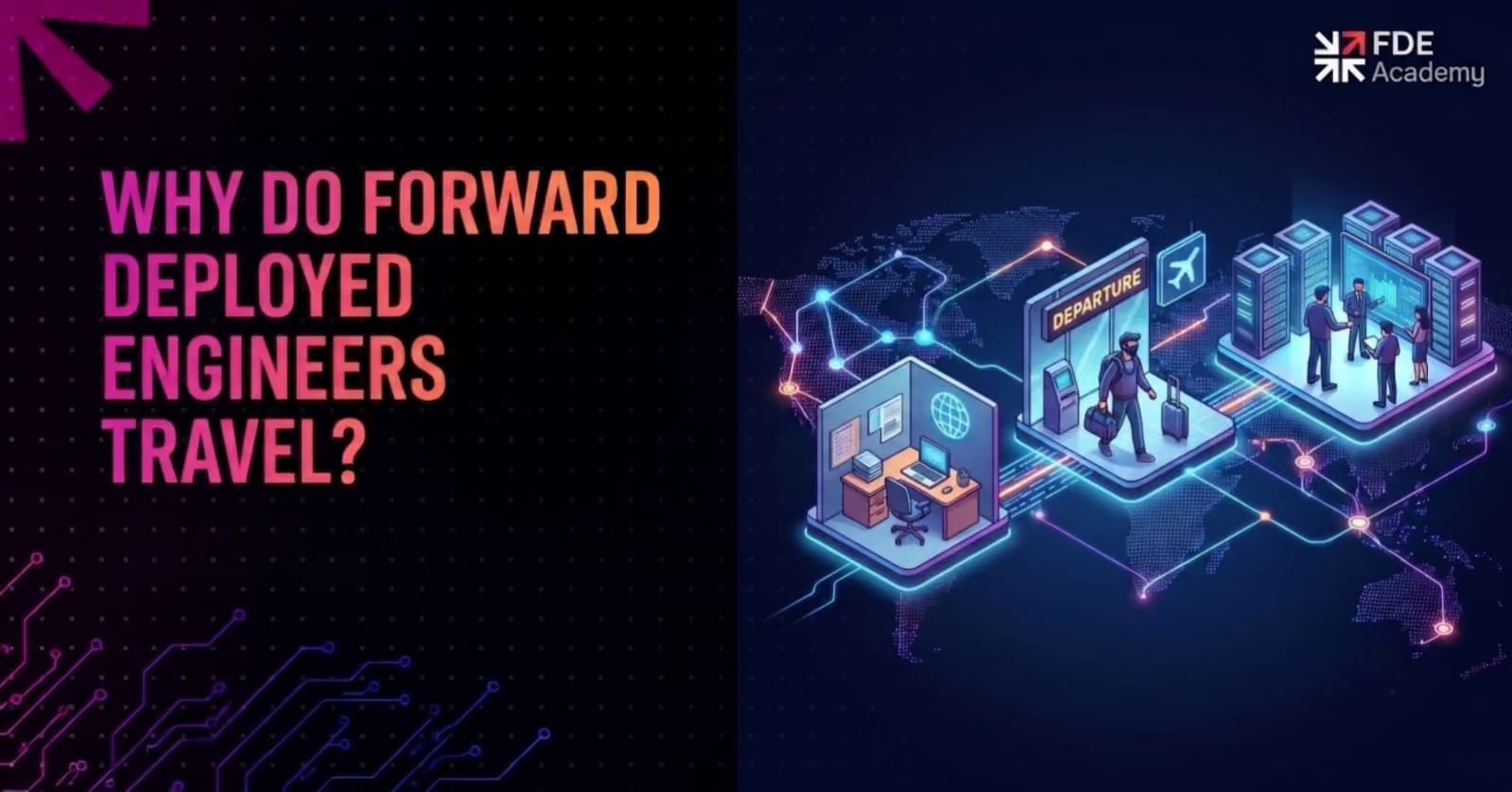
Forward Deployed Engineers travel because the core premise of the role building and owning a system inside a customer's actual environment often can't be done remotely. Security requirements, airgapped systems, and the need to understand real workflows firsthand mean the engineer has to go to where the problem actually lives, not the other way around.
That's not incidental to the job. It's baked into the name. "Forward deployed" is borrowed directly from military doctrine, where forward-deployed forces operate close to the point of action instead of from a distant base. The FDE model applies that same logic to software: instead of building in isolation and shipping to a customer, the engineer goes to the customer.
This is one of the most-asked questions from engineers actually considering the role not because travel is a minor logistical detail, but because it materially shapes what day-to-day life in the job looks like. This guide covers where the requirement comes from, why it exists for genuinely practical reasons rather than tradition alone, how much travel actually looks like across different companies and industries, and how to think about whether it's a fit for you specifically.
The phrase didn't originate in tech. In military doctrine, forward-deployed forces are positioned close to where action actually happens, rather than staged at a distant home base faster response, direct situational awareness, no lag between decision and execution.
Palantir helped popularize this model in enterprise and government software, applying the idea of placing engineers close to the customer's operational environment. The company found that even simple product demos for intelligence and defense customers could require weeks of NDAs, clearances, and access approvals before an engineer could so much as see the target environment. The only way to actually build something that worked was to go where the problem was, get the approvals, and sit next to the people who'd use it.
That origin story explains why travel isn't an unfortunate side effect of the FDE role; it's close to the entire reason the role exists in its original form.
Strip away the military framing, and a handful of concrete, practical reasons explain why remote work often can't replace physical presence for this specific job.
Some of the most sensitive deployments are defense, intelligence, critical infrastructure, and regulated financial systems run on airgapped networks that are physically disconnected from the outside internet by design. There's no remote-access workaround for a system that was deliberately built not to have one.
Former Palantir FDE Anjor Kanekar has described working on the final assembly line at aerospace manufacturer Airbus, and noted that many of his peers worked in similarly unconventional, sometimes airgapped environments. That's not an edge case for this category of work, it's a fairly normal one.
A customer's actual workflow rarely matches how it's described on a call. Being physically present lets an FDE see:
Industrial AI startup Matta puts this bluntly in its own hiring language, expecting FDEs to scope out solutions directly on the factory floor not from a conference room describing it secondhand.
Enterprise buyers, especially in regulated industries, have usually been burned before by a vendor who oversold a demo and disappeared after the contract was signed. Physical presence is a credibility signal that a video call can't fully replicate; it shows the vendor is willing to be accountable in the room, not just on a slide.
That trust-building matters most with the stakeholders who aren't technical: the compliance officer, the operations lead, the frontline staff who'll actually use the system. They're rarely won over by an architecture diagram alone.
Production issues inside a customer's own infrastructure sometimes require physical access, a badge to enter a facility, a workstation inside a secured network, or simply being present when something breaks so it can be diagnosed in real time rather than reconstructed after the fact from logs.
Being embedded on-site shortens the feedback loop dramatically. A question that would take three days to resolve over email waiting on the right stakeholder, waiting on access approval often gets answered in the same afternoon when the FDE is sitting a few desks away from the person who knows the answer.
Travel intensity varies significantly by company, industry, and customer type; there's no single universal number, but a consistent range shows up across the companies running FDE programs.
The general pattern: government, defense, healthcare, and industrial deployments skew toward the higher end. AI-lab and SaaS-vendor FDE roles tend to run hybrid, with travel concentrated around kickoffs, critical milestones, and periodic on-site stretches rather than constant presence.
A few consistent patterns show up in why travel intensity differs so much across sectors:
For a closer look at how these expectations actually show up in job postings, the specific phrases and percentages companies use for the Forward Deployed Engineer job description breaks down that language line by line.
Travel intensity for FDEs isn't fixed forever; it's shifting as the tooling available to the role changes. AI-assisted development has measurably compressed how much on-site time some deployments actually need: work that used to require a team of several engineers embedded for months can now be handled by a single FDE working faster with AI coding tools, cutting the total on-site window even when travel itself is still required.
That doesn't eliminate travel; the security, trust, and environment-fidelity reasons covered above haven't gone away. But it does mean the shape of travel is changing: shorter, more concentrated on-site stretches during discovery and go-live, with more of the ongoing monitoring and iteration work happening remotely once a system stabilizes.
Companies like PostHog, running a deliberately remote-first FDE model, represent an early version of where parts of this role may continue heading though for security-sensitive and airgapped deployments, physical presence is likely to remain non-negotiable regardless of how good the tooling gets.
Travel for an FDE rarely means a single day trip. On-site engagements typically run in concentrated stretches, and what happens during them varies by phase:
That rhythm front-loaded, intense, then tapering is a large part of why FDE travel doesn't map cleanly onto a fixed weekly percentage. It's better understood as concentrated bursts tied to where an engagement actually is in its lifecycle.
Before pursuing an FDE role specifically for the travel intensity it involves, it's worth being honest about fit. The role tends to suit people who:
It tends to suit people less well if they prefer deep, uninterrupted focus on a single codebase, need a highly structured and predictable weekly routine, or find frequent travel personally draining rather than energizing. Is Forward Deployed Engineering a good career goes deeper into this fit question, and Forward Deployed Engineer salary covers how travel demands typically factor into overall compensation and lifestyle tradeoffs.
Because the core of the role building inside a customer's actual environment often requires physical access for security reasons (airgapped systems), a firsthand understanding of the real workflow, and the trust-building that comes from being physically present with stakeholders.
It varies by company and industry, generally ranging from about 25% to 50% of the role. Government, defense, healthcare, and industrial deployments tend toward the higher end, while some AI-lab and SaaS-vendor roles run hybrid with lighter, more periodic travel.
No. Most do, but exceptions exist; some companies, like PostHog, run fully remote, async FDE models by deliberate design. It's worth confirming a specific company's actual travel expectations before assuming a fixed percentage applies.
It's borrowed from military doctrine, where forward-deployed forces operate close to the point of action rather than from a distant base. Palantir applied that same logic when it pioneered the FDE model for enterprise and government software.
It depends heavily on the company and customer base. India-based FDE roles, for example, typically involve 4–10 days a month domestically with occasional APAC travel, while roles at global enterprise or defense customers can involve more extensive international travel.
The world is hiring - and this Academy prepares you for it.