Blogs
Forward Deployed Engineer vs Software Engineer: The Complete Career Comparison Guide
Forward Deployed Engineer vs Software Engineer: The Complete Career Comparison Guide
By
R&D, FDE Academy
February 24, 2026

The key difference between a Forward Deployed Engineer and a Software Engineer is that software engineers build scalable products, while Forward Deployed Engineers deploy and adapt those products for real customers in live environments.
Same Degree, Very Different Career Outcomes
Two graduates begin their first tech job with identical programming expertise.
One takes years to develop scalable backend architectures and product architecture.
The other directly engages with clients, resolves crises in deployments and how the software is utilized in practice.
Both write code.
Both solve problems.
However, their professions move in entirely opposite directions. That is why the debate between FDE and software engineer is gaining more significance in 2026.
New hybrid roles such as Forward Deployed Engineer are emerging rapidly as companies shift to delivering technology that is more customer-centric.
This detailed map outlines the forward deployed engineer vs software engineer career over responsibilities, skills, growth, salary trends, and lifestyle - assisting the reader to make an informed career choice.
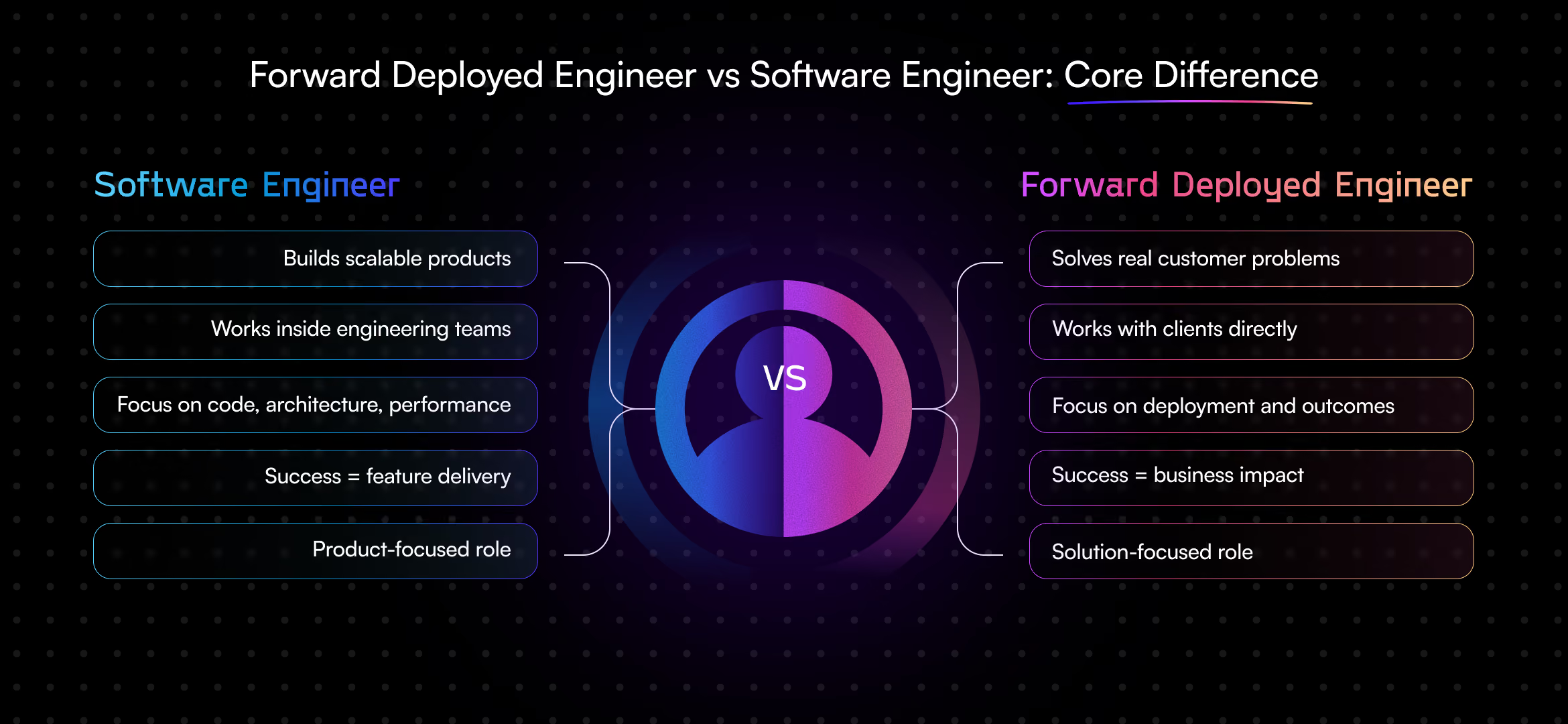
The major role of a software engineer is to create digital products. Their mandate is to design, develop, test, and maintain software systems that can be used by a large number of users.
Software engineers are typically part of organized product teams in which the team is frequently delivered in roadmaps, sprints, and release cycles.
Their success is measured by:
The Forward Deployed Engineer (FDE) develops and deploys software into the actual customer environment.
FDEs do not just stop at the creation of the products, but make sure that the software is actually working at the resolution of business problems once it has been deployed.
They frequently sit at the crossroads of engineering, consulting, and solution architecture.
FDEs succeed when:
The largest gap between FDE and software engineer is this practical orientation.
The two roles are at the bottom level, functioning at various points within the technology lifecycle.
In short: Technology is developed by software engineers. FDEs bring technology to practice.
This is an important FDE job role comparison in understanding of daily work.
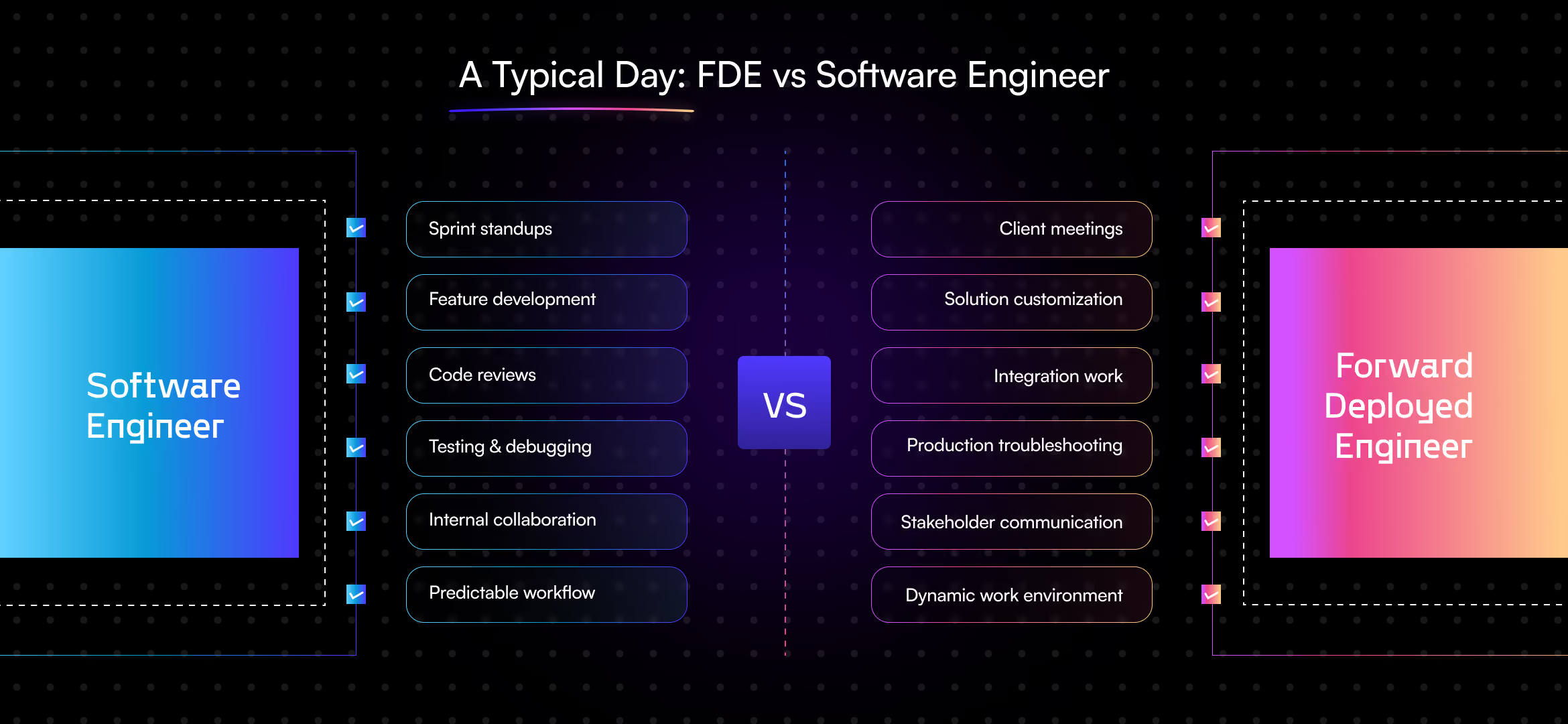
The work is dynamic, cross-functional, and tends to be time sensitive.
The programming skill is also needed in both positions, just that the skills vary in nature.
This is where the difference between a customer facing engineer and software engineer lies. A complete breakdown of Forward Deployed Engineer skills covers each of these competencies in detail.
Systems are optimised by software engineers.
FDEs optimise solutions.
This path rewards:
This path rewards:
When comparing the FDE career with the software developer career, software engineering has intense technical power, whereas FDE career has a wide-ranging technical and strategic power.
The increasing demand of FDEs is supported by the fact that companies are currently competing not only in terms of products of quality, but adoption and results as well.
The salaries of software engineers are good because they are always needed by the world to develop its programs. However:
Both professions have good financial opportunities, the distinction is the complexity of the job and exposure.
Other engineers prefer stability and immersion in technical aspects.
Others like variety, being seen and rapid decision-making setups.
The forward deployed engineer vs software engineer decision has no clear winner.
The superior course is based on personality, strength and career aspirations.
Scenario 1: Thousands of users are impacted by a bug in the product.
Scenario 2: A client requires an urgent integration with old systems.
Scenario 3: The company introduces a new platform.
Neither of the two roles can be ignored in product success, they are just functioning at the different levels of the value chain.
The technology firms are more concerned with the quantifiable results of business.
They no longer ask only: “Does the software work?”
They now ask:
This transition justifies the mushrooming of forward deployed engineering in:
FDEs are transforming to become strategic technical advisors who can bridge the gap between product teams and real-world users.
The intelligence or coding skill does not make the difference between the jobs of FDE and software engineer.
It is concerned with the generation of value.
In case a person is fond of designing systems and learning the intricate technical issues, software engineering is a potent and consistent profession. The FDE path might be dynamic, influential, and rewarding, especially when an individual likes to have the real problems and real users and is eager to have a quicker exposure to business impact. Both professions are future proofed. The most appropriate option is the one that is in line with the personal strength, the working style and the long-term objectives. Engineers exploring broader comparisons can also read about Forward Deployed Engineer vs other engineering roles.
Yes, a forward-deployed engineer is a type of software engineer, but with a distinct focus. While traditional software engineers primarily build and maintain core products internally, forward-deployed engineers apply those products in real customer environments. They write production-level code, customize solutions, and manage deployments while working closely with clients, combining deep engineering skills with business-facing responsibilities.
The primary difference lies in customer involvement and deployment ownership. Software engineers typically focus on building and maintaining core products internally, while forward deployed engineers work directly with customers to customize, deploy, and optimize those products in real-world environments.
Yes, forward deployed engineers write production-grade code similar to software engineers. However, their coding often focuses on customization, integration, and deployment within customer environments rather than building core platform features.
Compensation depends on company and location, but forward deployed engineers often earn equal or slightly higher total compensation due to their hybrid technical and customer-facing responsibilities. Their role combines engineering depth with business impact, which can increase pay potential.
Both roles offer strong growth paths. Software engineers may progress toward senior engineering or technical leadership roles, while forward deployed engineers often move into solutions architecture, product management, or strategic engineering leadership due to their exposure to customers and business strategy.
Yes, many forward deployed engineers start as software engineers. Professionals with strong coding skills, system design knowledge, and an interest in customer-facing problem solving can transition by gaining experience in deployment, integration, and stakeholder communication.
The world is hiring - and this Academy prepares you for it.