Blogs
Forward Deployed Engineer Resume: How to Write One That Gets Interviews
Forward Deployed Engineer Resume: How to Write One That Gets Interviews
By
R&D, FDE Academy
September 29, 2026

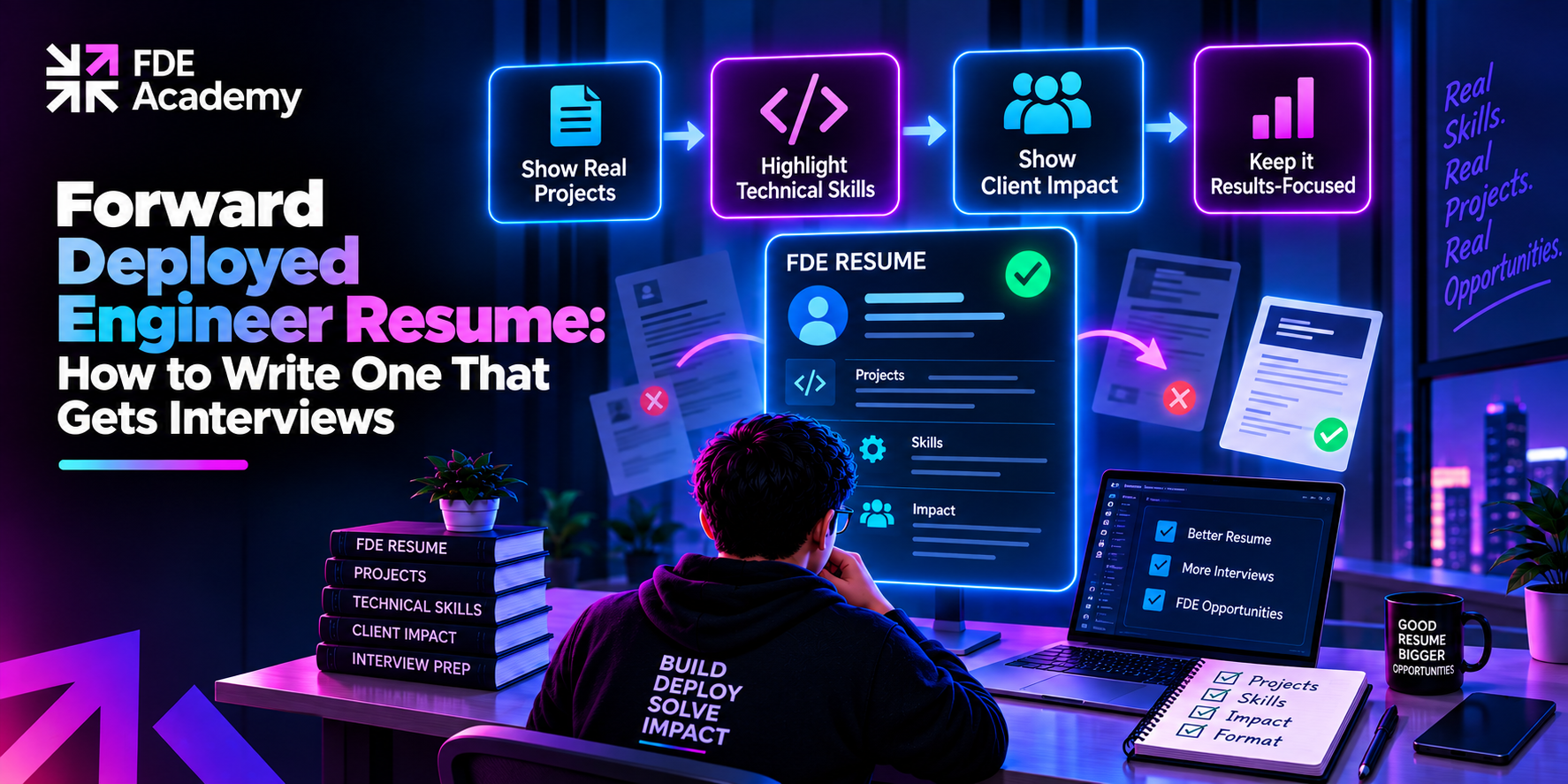
The single biggest reason strong engineers get filtered out of FDE hiring pipelines isn't a lack of skill it's a resume written in the wrong register. A typical software engineer resume emphasizes what you built and what technologies you used. An FDE resume needs to emphasize what you built, for whom, under what real-world constraint, and what measurable outcome it produced in production because that's exactly what the role tests for, day to day, as described in the technical skills an FDE actually needs.
This isn't cosmetic. Recruiters and hiring managers screening FDE resumes are specifically looking for signals of deployment ownership and business-outcome thinking, not just technical breadth. A resume that reads like every other backend engineer's resume, even from a genuinely strong candidate, doesn't demonstrate that signal and gets passed over for a comparatively weaker candidate whose resume happens to speak the right language. For the fuller picture of how resume, portfolio, and interview prep fit together, see our broader Forward Deployed Engineer resume, portfolio, and interview guide this article goes deep specifically on writing the resume itself.
Every strong bullet point on an FDE resume follows the same underlying structure, even when the wording varies:
[Action verb] + [what you built/deployed] + [the specific constraint or complexity] + [the measurable outcome]
For example: "Designed and deployed an API integration layer connecting five enterprise data sources with incompatible authentication protocols, reducing manual data synchronization time by 80% across 20 client accounts."
Notice what this does that a generic engineering bullet doesn't: it names a real constraint (incompatible authentication protocols across five sources) and ties the work to a quantified business outcome (80% time reduction, 20 accounts), not just a technical description of what was built.
Most FDE roles are still parsed by an applicant tracking system before a human ever sees the resume, which means keyword coverage matters as much as writing quality. Based on how FDE job postings are actually worded, prioritize working these terms naturally into your bullet points and skills section wherever they honestly describe your experience:
Never keyword-stuff a bullet point purely to hit ATS terms a resume that reads as unnatural to a human reviewer fails the second screen even if it clears the first. The goal is natural coverage across real experience, not a forced checklist.
A strong FDE resume typically runs one page (two only with 8+ years of relevant experience) and follows this section order:
If you're transitioning from software engineering, consulting, or a related role, reframe your existing experience using the same formula rather than waiting until you have an official "Forward Deployed Engineer" title. A consulting engagement that involved integrating systems for a client, a project that required navigating a messy legacy environment, or even a substantial personal project deployed to real users can all be framed in deployment-and-constraint terms. If you're still assessing whether this career path is the right fit before investing time in a tailored resume, our self-assessment guide, am I ready to become a Forward Deployed Engineer, is a useful starting point, and how to become a Forward Deployed Engineer covers how to build the relevant experience deliberately.
TL;DR: A Forward Deployed Engineer resume gets interviews when it frames experience in deployment and impact terms not generic software engineer language using a specific bullet-point formula (action + what you built + the constraint you solved + the measurable outcome), the right keywords for both ATS systems and human reviewers, and a structure that leads with production impact rather than a technology list. Below is the exact structure, formula, and before/after examples to apply it.
An FDE resume frames experience around deployment ownership and business-outcome impact under real constraints, rather than just listing technologies used. Reviewers are specifically screening for evidence of deployment judgment, not just technical breadth.
Action verb + what you built or deployed + the specific real-world constraint you navigated + a measurable outcome. Naming the constraint is what distinguishes strong FDE bullets from generic engineering bullets.
Role terms like "Forward Deployed Engineer," "systems integration," and "production deployment"; technical terms like API integration, data pipeline, and cloud infrastructure; and outcome terms that show measurable impact but only where they honestly describe your actual experience.
One page for most candidates; two pages only if you have 8 or more years of genuinely relevant experience. FDE hiring managers favor a tightly curated set of strong, quantified deployment stories over an exhaustive list of every project.
Yes. Reframe adjacent experience consulting engagements, systems integration projects, or significant deployed personal projects using the same constraint-and-outcome formula, rather than waiting for an official title to apply.
Leading with a list of technologies rather than outcomes, and omitting the specific constraint that made a project hard both of which fail to demonstrate the deployment judgment FDE hiring is specifically screening for.
The world is hiring - and this Academy prepares you for it.