Blogs
How to Find Qualified Forward Deployed Engineers
How to Find Qualified Forward Deployed Engineers
By
R&D, FDE Academy
September 22, 2026

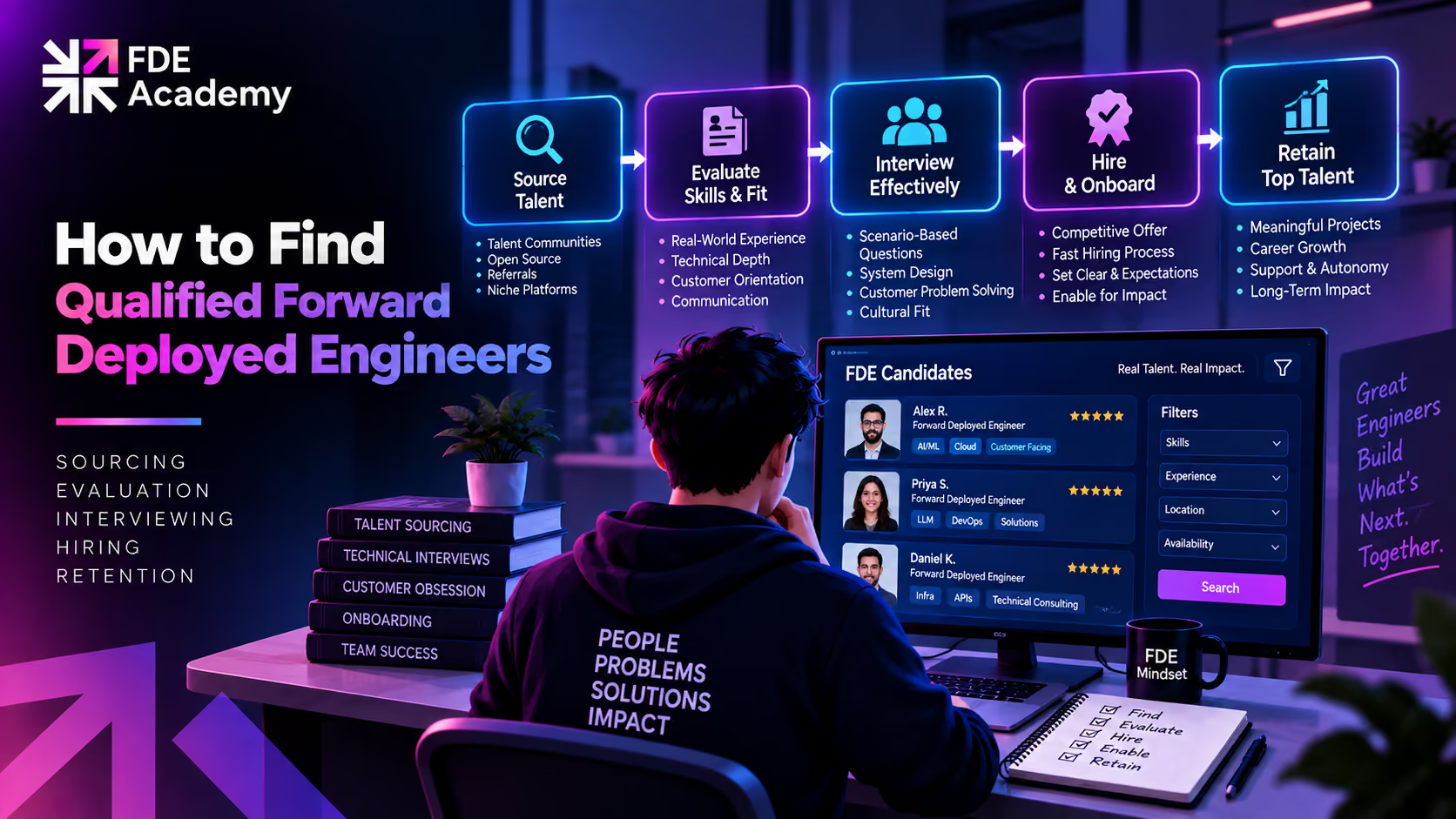
Before getting into tactics, it's worth naming the actual problem clearly, since it changes how you should approach the search. Postings have outpaced the talent supply FDE-related job postings grew more than 800% in 2025, far faster than the number of engineers who've genuinely done the job. That mismatch means the label on a resume tells you almost nothing on its own. Most resumes with "Forward Deployed Engineer" on them today are recent relabels, not real track records, which makes sourcing and screening for this role meaningfully different from hiring for a more established title like "backend engineer" or "solutions architect."
If you're still deciding whether to hire, build, or partner for this capability at all, our broader guide on how to hire Forward Deployed Engineers covers that strategic decision build vs. hire-train-deploy vs. vendor, and how to clarify whether you actually need an FDE or a different, adjacent role. This article picks up from there and focuses specifically on the sourcing and screening mechanics once you've decided to search.
A surprising number of FDE searches stall before sourcing even begins, because the hiring need was never clearly defined. Founders often kick off a search saying they want an FDE, only to realize on closer examination that what they actually need is either a formal software engineer or a post-sales role like an implementation consultant or customer success manager. The instinct to hire "an all-in-one person who can build the product, implement it, train customers, customize it, and keep everyone happy" is understandable, but rarely realistic at scale.
Before sourcing, it's worth asking the clarifying questions that separate a real FDE need from a mislabeled one: what specifically triggered this opening, who's doing this work on your team today, and what would actually happen if you don't fill it. Our piece on common myths about Forward Deployed Engineers is a useful gut-check here too, since several of the most persistent hiring-manager misconceptions about the role directly shape (and distort) the job description you end up sourcing against.
Generic job boards are a weak primary channel for this specific role, precisely because of the supply mismatch described above posting an "FDE" listing publicly tends to surface a flood of relabeled resumes rather than genuinely qualified candidates. Specialized FDE pipelines have become the fastest-growing sourcing channel for exactly this reason: no traditional degree or bootcamp has historically produced this role, which means the strongest signal often comes from structured programs that pre-screen on both halves of the job technical delivery and client-facing skill before a candidate ever reaches your desk.
Referral networks and alumni communities from companies with established FDE functions (Palantir being the most well-known origin point) are another strong channel, since candidates sourced this way already carry implicit validation from having done the work at an organization known for running the role seriously. If you want a lower-commitment way to test this capability before committing to a full hire, a fractional Forward Deployed Engineer arrangement is worth considering as a sourcing strategy in itself a smaller initial commitment that still gives you a real read on whether the role delivers value for your specific product and customer base.
This is where most FDE searches actually go wrong not in finding candidates, but in failing to distinguish a genuine FDE background from an adjacent title wearing the label. The clearest single screening signal: if you're evaluating a candidate who calls themselves an FDE but describes pre-sale demo work, you're actually evaluating a Solutions Engineer with a relabeled title, not a Forward Deployed Engineer. Our comparison of Forward Deployed Engineer vs Solutions Engineer, Sales Engineer, and Customer Success Engineer is worth reviewing before your first screening call, since the boundary between these titles is exactly where mislabeled candidates hide.
Ground your technical screening in what the role actually requires, not a generic engineering rubric our breakdown of the skills an FDE actually needs is a useful checklist to screen against directly. In practice, that means probing for production ownership specifically: did the candidate write and ship code that ran against a real customer's live environment, or did they build a proof-of-concept that someone else then productionized? Did they stay accountable through deployment and adoption, or did their involvement end at handoff? These distinctions matter far more for this role than for most engineering hires, since the entire value proposition of an FDE rests on end-to-end ownership rather than a narrower, well-fenced contribution.
It also helps to structure your evaluation the way strong FDE teams evaluate their own engineers once hired our guide on how Forward Deployed Engineers are evaluated covers the criteria mature organizations actually use, which translates directly into stronger interview questions and assessment design at the hiring stage.
A few specific, pointed questions consistently surface the gap between genuine FDE experience and adjacent-role experience wearing the title. Ask a candidate to walk through one specific deployment from first customer contact through production stability not a portfolio summary, but the actual sequence of decisions, obstacles, and trade-offs. Ask what happened after the system went live: did they stay involved through adoption, debugging, and iteration, or did their responsibility end at launch. Ask how they handled a moment where the customer's environment didn't match what was scoped a scenario every real FDE engagement eventually produces, and one relabeled candidates typically can't answer with specific, concrete detail.
Reference checks matter more for this role than for most technical hires, precisely because the title itself carries less reliable signal right now than it normally would. A reference who can confirm the candidate personally wrote and shipped production code against a real customer's systems not just "led the project" in a coordinating capacity is worth significantly more than a reference who speaks only to general competence or likability.
Given the supply constraint described above, it's worth calibrating your search timeline honestly from the start. A from-scratch, open-market search for a genuinely qualified, experienced FDE can take considerably longer than a comparable search for a more established engineering title, simply because the qualified pool is smaller than the demand signal suggests. If your business is judged upmarket enough to justify the investment forward deployed engineering is fundamentally an upmarket motion, most valuable when your customer base includes large, complex enterprise accounts rather than a self-serve, product-led-growth customer base the investment in a longer, more careful search is usually justified. If you're earlier-stage or your customer base skews smaller, revisit whether a full FDE hire, versus a fractional arrangement or an adjacent role, is genuinely the right call before committing to a long search.
Given how mismatched supply and demand currently are for this specific title, many organizations are finding it faster and lower-risk to source through a structured hire-train-deploy pipeline rather than relying on an already limited open-market pool of experienced candidates. A well-run pipeline pre-vets engineers on both technical delivery and client-facing skill before you ever see a resume solving the exact screening problem this article walks through, but earlier in the process, before your team's time gets spent on interviews with mislabeled candidates.
If you'd rather not run this search entirely from scratch, FDE Academy's hire, train, deploy FDE talent program is built specifically to move faster than an open-market search, without the guesswork of an unscreened vendor relationship giving you access to a pool already screened against the real, production-ownership bar this article describes. For the broader case on why this capability is worth the investment in the first place, our guide on benefits of hiring Forward Deployed Engineers for enterprise AI is a useful companion read.
FDE job postings grew more than 800% in 2025, far outpacing the number of engineers who've actually done the work. This supply-demand mismatch means most resumes carrying the title today are recent relabels rather than real track records, making the title itself an unreliable screening signal on its own.
The clearest red flag is a candidate who describes primarily pre-sale demo work rather than production ownership that profile usually indicates a Solutions Engineer or similar adjacent role with a relabeled title, not a genuine Forward Deployed Engineer background.
Structured FDE-specific pipelines, referral networks from companies with established FDE functions, and fractional or trial arrangements tend to outperform generic job board postings, since public postings for this exact title currently attract a high volume of mislabeled candidates.
Ask a candidate to walk through one specific deployment end to end, including what happened after launch and how they handled a moment where the customer's environment didn't match the original scope. Genuine FDEs can answer these with specific, concrete detail; relabeled candidates typically cannot.
More important than for most technical roles, precisely because the title currently carries less reliable signal on its own. A reference who can confirm the candidate personally shipped production code against a real customer's systems is far more valuable than a general competence reference.
Yes. A structured hire-train-deploy pipeline that pre-vets candidates on both technical delivery and client-facing skill before you see a resume is generally faster and lower-risk than a from-scratch open-market search, given how limited the genuinely qualified talent pool currently is relative to demand.
The world is hiring - and this Academy prepares you for it.